
Economic Policy
The Fed Held. Texas Held Firmer.
August 4, 2026
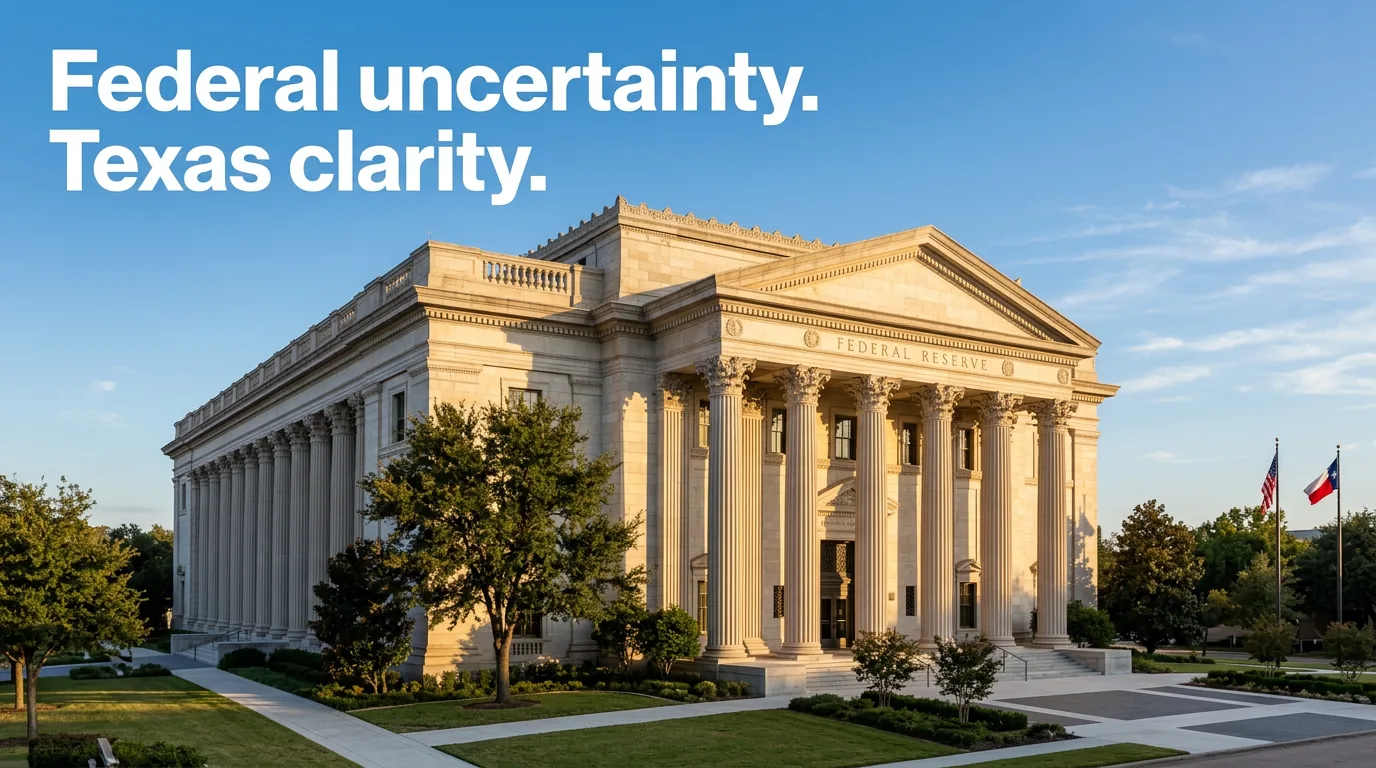
The Federal Reserve voted 9 to 3 last Tuesday to hold rates at 3.50% to 3.75%. Three regional presidents dissented: Beth Hammack of Cleveland, Neel Kashkari of Minneapolis, and Lorie Logan of Dallas all called for an immediate quarter-point hike. Three dissenting votes pushing the same direction last happened in September 2016.
The White House has been pushing for cuts. Three regional bank presidents are pushing for hikes. Chair Kevin Warsh is holding, arguing market yields are already doing the tightening.
Inflation has been above the Fed's 2% target since March 2021. Tariff pressure and higher energy costs from the Iran conflict have kept it there. Reports surfaced days later that Warsh is considering reducing FOMC meetings from eight per year to five or six. That eight-meeting calendar has not changed since Volcker established it in 1981.
Fed funds futures moved to price in an 80% probability of a September hike. The week before, those odds sat below 53%.
Most of the manufacturers I work with are not financing Texas facilities through US banks. Capital comes from Seoul or Taipei. But the Fed still matters. Dollar strength affects landed construction costs and equipment pricing. US demand signals shape 10-year revenue projections. And contested monetary policy creates the kind of uncertainty that slows decisions on 20 to 30-year capital commitments.
Texas made a deliberate bet decades ago to compete on what it could control. No corporate income tax. No personal income tax. Incentive programs that have remained consistent across administrations. A permitting environment that moves. Companies making 20 to 30-year commitments understand this. The federal rate will change. Those fundamentals will not.
Three dissenters did not change the rate on Tuesday. They made the case for Texas stronger.
Jacey Jetton, Founder & CEO, Jetton Solutions